By Shu’aibu Usman Leman
As Nigeria steadily approaches 2026, I find myself reflecting on the state of media freedom not as an abstract concept, but through the lens of lived experience. For more than thirty years, I have navigated this landscape, not as a distant commentator, but as a journalist who has felt the pressures, risks, and responsibilities of reporting truth in a country where power often resists scrutiny.
Democracy cannot be measured merely by words in constitutions. Its true measure is how safely journalists can investigate, interrogate, and publish uncomfortable truths without fear. When fear dictates the boundaries of reporting, democracy becomes a hollow phrase, a promise unfulfilled in daily life.
In Nigeria, freedom of expression has too often been a paper guarantee. Laws may exist to protect journalists, but the reality is starkly different. Editorial decisions are shaped by unspoken rules, and newsrooms operate under a constant awareness that stepping beyond invisible lines carries consequences.
Fear quietly reshapes editorial judgment. Investigations are abandoned midstream, critical questions remain unasked, and journalists increasingly self-censor to avoid confrontation. A society where truth is conditional cannot call itself democratic.
Historically, the relationship between the Nigerian state and the media has been tense, sometimes openly hostile. Journalism is tolerated when it flatters authority and punished when it questions it. Over decades, this has cultivated a dangerous mindset where accountability is viewed as opposition.
I have witnessed first-hand how state power can be mobilised against journalists. Arrests without transparent charges, repeated summons, prolonged interrogations, and equipment seizures are familiar realities. These actions are rarely about correcting inaccuracies; they are tools of intimidation, designed to exhaust and coerce.
The psychological cost is often more insidious than the physical. Fear seeps into newsrooms, influencing decisions subtly but profoundly. Silence becomes safer than investigation, and over time, self-censorship replaces journalistic courage, shrinking the public space for truth.
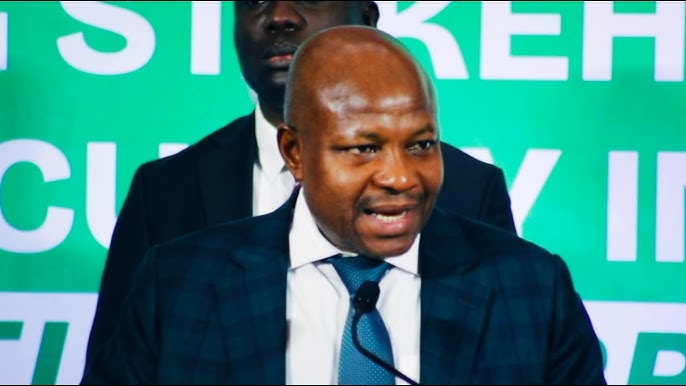
It is against this backdrop that the recognition of the Director-General of the Department of State Services, Mr Oluwatosin Ajayi, assumes significance. His commitment to media freedom, acknowledged by the Nigerian National Committee of the International Press Institute (IPI Nigeria), represents a rare and notable stance in Nigeria’s security landscape.
Such a public commitment from the head of one of the nation’s most powerful security agencies cannot be dismissed as symbolic alone. It signals an understanding that respect for journalists and press freedom is compatible with effective security operations.
President Bola Ahmed Tinubu’s commendation of Mr Ajayi further amplifies the moment’s importance. His statement that the DSS under Ajayi is fostering a more constructive relationship with the media reflects an official recognition that security and press freedom are not mutually exclusive.
Governor Dapo Abiodun’s remarks, describing the award as a testament to professionalism and democratic values, reinforce its symbolic weight. The acknowledgment from IPI Nigeria underscores an essential truth, that media freedom is not an external imposition, but a domestic democratic necessity championed by Nigerian journalists themselves.
Having served for over twenty years as National Secretary of the Nigeria Union of Journalists, I do not offer praise lightly. Mr Ajayi’s stance deserves acknowledgment because it represents a break, however tentative, from the historical narrative of antagonism between security agencies and the press.
Yet caution is warranted. Nigerian journalists have witnessed fine words undermined by entrenched institutional culture and unaccountable operatives. Statements alone cannot dismantle decades of habitual intimidation. Real change requires practice as much as promise.
For this recognition to translate into meaningful reform, it must be supported by clear operational directives, sustained leadership, and robust accountability mechanisms within the DSS and across the security sector. Without these, trust remains fragile.
Media freedom cannot rely on individual goodwill. It must be protected by institutions, laws, and enforceable standards that endure beyond the tenure of a single leader. The protection of journalists should be consistent, automatic, and non-negotiable.
Impunity remains one of the most corrosive threats to press freedom in Nigeria. When attacks on journalists go unresolved, the message is devastating, that intimidation works, and consequences are minimal. Until perpetrators are held accountable, declarations of reform are precarious.
Security agencies must recognise that journalism is not destabilising; it is stabilising. By exposing corruption, amplifying grievances, and providing accurate information, the media helps prevent crises. Silencing journalists does not create security—it postpones unrest, often at greater societal cost.
The challenge extends beyond Abuja. At state and local levels, hostility toward the press can be more personal, more immediate, and more dangerous. Local power brokers frequently treat journalists as adversaries, depriving communities of scrutiny and accountability.
Ultimately, the cost of suppressed journalism is borne by citizens. Misinformation thrives where credible reporting is silenced. Public trust erodes, governance becomes opaque, and rumours flourish, undermining national cohesion and informed decision-making.
A government’s treatment of the media is a mirror of its attitude toward its citizens. A state that fears scrutiny often fears accountability itself. Conversely, a confident democracy engages criticism, embraces transparency, and recognises journalists as partners in national development.
As Nigeria approaches 2026 , our goal should not be perfection, but principle. Disputes between the state and the press must be resolved through law, dialogue, and institutional mechanisms—not intimidation. Security agencies should never again be instruments for enforced silence.
The enduring cost of truth in Nigeria has been borne disproportionately by journalists, who have lost freedom, livelihoods, and, tragically, in some cases, lives. If democracy is to deepen, that burden must be shared by institutions through consistent law, accountability, and a culture of respect for the Fourth Estate.
Media freedom is not a favour granted by the state. It is a constitutional right belonging to every Nigerian. Protecting journalists is not an act of generosity; it is an obligation. Only by honouring this duty can we ensure that the sacrifices of those who spoke truth to power were not made in vain, and that the next generation inherits a society where the press can operate freely, safely, and with the respect it has long earned.
Leman is a former National Secretary of the Nigeria Union of Journalists (NUJ).